Watch a Preview of the IV Nutrition Infusion Therapy Course
This course is designed for healthcare professionals, including physicians, nurses, nurse practitioners, physician assistants, dentists, and internationally trained medical professionals who want structured education in IV hydration and nutrient therapy. Eligibility to perform IV therapy in practice depends on local licensing, scope-of-practice rules, employer policies, and any hands-on competency requirements in your jurisdiction.
The course is designed to help you build a practical foundation in IV therapy, including patient assessment, protocols, safety, documentation, and practice integration. Completing an online certificate does not by itself authorize independent IV practice; implementation should follow your professional scope, local regulations, and any required supervised or hands-on competency training.
The course includes 12 modules covering IV therapy fundamentals, relevant anatomy and physiology, nutrient-based protocols, patient assessment, administration principles, safety and complication awareness, legal and ethical considerations, and practice integration. A CBAM Certificate of Completion is issued after successful completion of the required course components.
No prior IV therapy experience is required to begin the online course. The curriculum progresses from foundational concepts to clinical considerations and practice integration. Performing IV therapy on patients may require professional licensure, supervised skills training, demonstrated competency, or other jurisdiction-specific requirements beyond completion of an online course.
Why IV Therapy Training
Build a Stronger Foundation in IV Hydration and Nutrient Therapy
IV hydration and nutrient therapy are increasingly incorporated into medical, wellness, longevity, and aesthetic practices. This course gives healthcare professionals a structured way to study the clinical foundations, patient assessment, protocol planning, safety principles, and operational considerations involved in IV therapy.
The focus is not only on what may be included in an IV protocol, but also on how to evaluate patients, recognize risk, document care, understand professional responsibilities, and plan responsible integration into an existing practice.
Clinical education comes before service expansion.Course completion supports your knowledge development, while authority to perform IV therapy depends on local regulation, professional scope, and competency requirements.
Energy Boost IV
Protocol-focused education for wellness-oriented IV services
Hydration Therapy
Hydration-focused protocol planning and patient considerations
Immunity Support IV
Vitamin C–based protocol concepts and clinical considerations
Skin Glow IV
Glutathione and antioxidant-focused protocol education
Anti-Fatigue Treatments
NAD+ protocol concepts, assessment, and monitoring considerations
The curriculum examines how commonly discussed IV services may be evaluated, structured, and integrated within an appropriate clinical setting.
Course Structure
Step-by-Step Training — From Fundamentals to Practice
Twelve modules progress from IV therapy foundations and physiology to patient assessment, safety, protocol planning, legal and ethical considerations, and practice integration.
01
Introduction to IV Therapy
Foundations of intravenous hydration and nutrient therapy, including terminology, treatment concepts, and the role of IV services within medical, wellness, longevity, and aesthetic practice.
02 – 03
Science & Physiology
Review nutrients commonly discussed in IV therapy alongside relevant anatomy and physiology needed to understand IV administration, patient assessment, and risk.
Understanding nutrients in IV therapy
Anatomy and physiology of IV administration
Module 04 — IV Therapy Packages You Can Offer
Review commonly used IV therapy protocol categories and the clinical considerations that inform patient selection, planning, monitoring, and documentation.
Myers' Cocktail
Glutathione Drip
NAD+ Therapy
Immune Support IV
Hydration Therapy
Vitamin C Mega-Dose
Athletic Performance IV
Anti-Aging IV Therapy
05 – 08
Clinical Administration & Safety
Clinical considerations for IV therapy, from patient assessment and equipment planning to administration principles, monitoring, documentation, and complication recognition.
Patient assessment and consultation
Equipment, supplies, and clinic setup
Administration techniques
Complication management
09 – 12
Business & Practice Growth
Practice integration topics including evidence review, ethical marketing, financial planning, legal considerations, and responsible service development.
Evidence-based IV therapy
Financial growth and marketing
Legal and ethical considerations
Expanding your practice
Practice Integration
Plan IV Therapy Services Responsibly
Adding IV therapy to an existing medical, wellness, or aesthetic practice requires more than choosing a protocol. Providers need to consider patient selection, clinical workflow, equipment, documentation, professional scope, pricing, consent, emergency readiness, and local regulatory requirements.
Patient Experience
Learn to think through consultation, informed consent, treatment planning, follow-up, and patient communication as part of a structured IV therapy service.
Operational Planning
Consider supplies, equipment, staffing, workflow, documentation, pricing, and other operational factors before integrating IV therapy into an existing practice.
Responsible Implementation
Translate course knowledge into an implementation plan that accounts for local regulations, professional scope, hands-on competency, emergency preparedness, and clinic policies.
Course completion is one part of practice readiness.Before treating patients, confirm applicable licensing rules, scope of practice, supervision requirements, hands-on competency expectations, prescribing requirements, and local standards of care.
Your Credential
Earn Your IV Therapy Certification
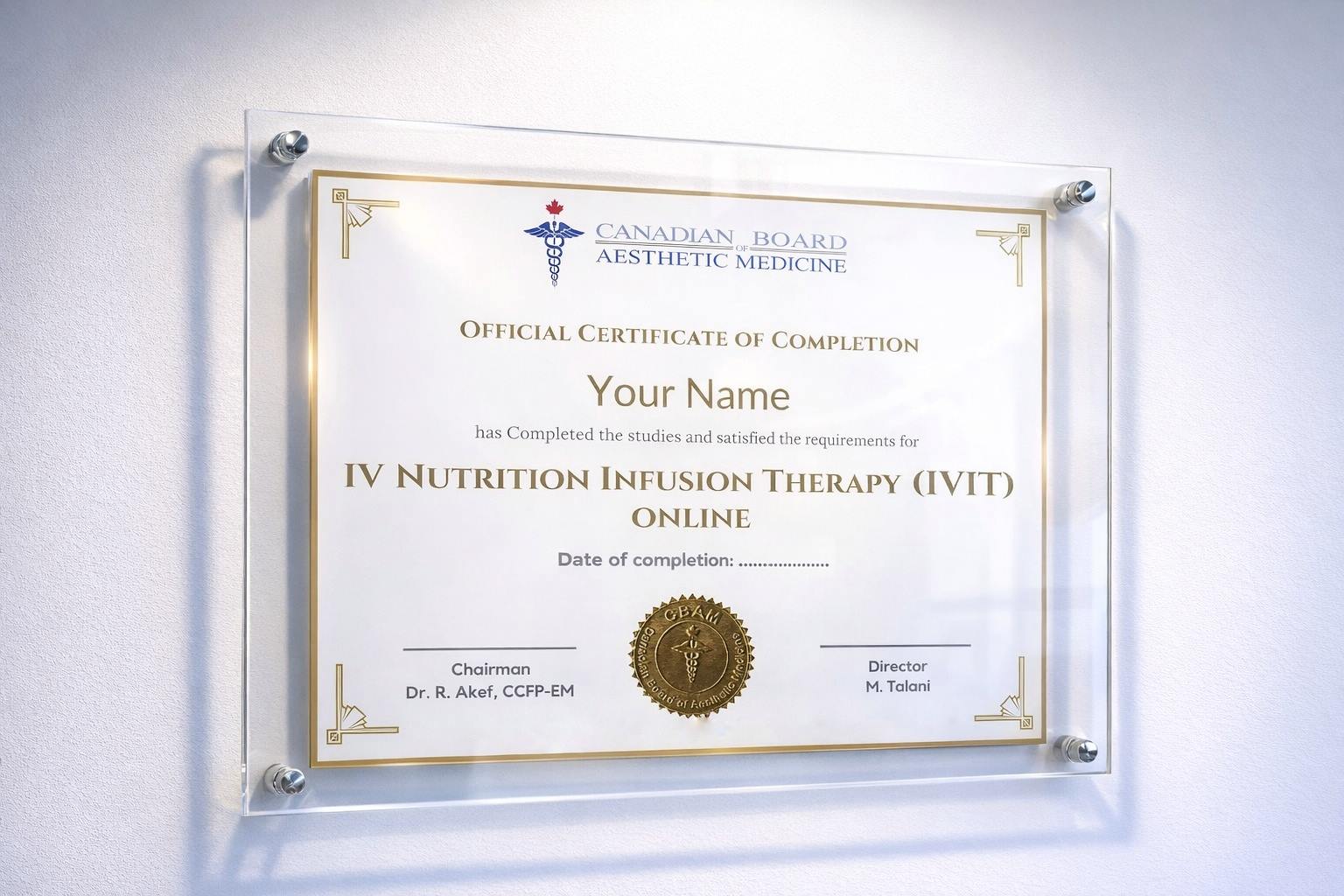
After successfully completing the required course components, you receive a CBAM IV Nutrition Infusion Therapy Certificate of Completion documenting your completion of the online educational program. The certificate does not replace professional licensure, local authorization, or hands-on competency requirements where these apply.
CME-Accredited Training
Includes CME-accredited educational components for eligible professional development. Learners should confirm any profession- or jurisdiction-specific credit requirements that apply to them.
Practical, Clinic-Ready Knowledge
The curriculum connects clinical concepts with practical considerations such as protocol planning, patient communication, documentation, safety, and practice integration.
Real-World Application
Training is designed around clinical decision-making and the practical questions healthcare professionals face when evaluating IV therapy for medical, wellness, or aesthetic practice.
Enrollment & Access
The Complete System combines IV Therapy with Skin, Regenerative Medicine, Injectables, and Business training in one broader program. It may be a better fit for learners planning multi-specialty aesthetic medicine education rather than IV therapy training alone. Compare the current program inclusions and pricing before enrolling.
Upgrade options may be available after enrollment. Contact the CBAM team for current eligibility, inclusions, and pricing before making an upgrade decision.
Enroll Today
One Course — or a Complete System
Start with IV therapy, or access everything in one complete training system.
Go Beyond IV — Build a Complete Treatment Offering
IV therapy works best when combined with skin therapies, regenerative treatments, and anti-aging protocols. Instead of building services one by one, access everything in one complete training system.
With the Complete Aesthetic System, you unlock:
IV Therapyyour current focus
Skin TreatmentsMicroneedling, Peels, Laser
Regenerative MedicinePRP, Exosomes, PDRN
InjectablesNeurotoxin, Fillers, Anatomy
Business & Clinic GrowthPricing, marketing, scale
Skin + Regenerative + Injectables + IV + Business
Full clinical + revenue training
19 Certificates + 2 Diplomas
CA$3,199
IV Therapy CourseCA$1,100 — Single specialty
Complete SystemCA$3,199 — Full practice expansion
Better value than purchasing programs individually
IV hydration and nutrient therapy are used across medical, wellness, longevity, and aesthetic settings. For clinicians considering this area, structured education should address patient assessment, safety, protocol planning, professional scope, and responsible practice integration — not only the treatment menu.
12
Course Modules
Structured Curriculum
From foundations and safety to practice integration
Online
Self-Paced Education
Flexible Learning
Study the educational curriculum on your schedule
1yr
Online Course Access
Self-Paced Learning
Designed for busy healthcare professionals
Covers IV hydration, nutrient therapy, patient assessment, safety, and protocol planning
Ideal for physicians, nurses, NPs, dentists, IMGs, and aesthetic medicine providers
Includes practice-integration, legal, ethical, and operational considerations
IV Therapy Training Guide
What Healthcare Professionals Ask Before Choosing an IV Therapy Course
Choosing an IV Therapy Certificate Course is not only about reviewing protocols. Healthcare professionals should also consider who the training is designed for, what clinical knowledge it covers, whether hands-on competency is required separately, how certification differs from professional authorization, and which legal, safety, and scope-of-practice requirements apply before IV therapy is provided to patients.
Can IV therapy certification be completed online?
The educational component of IV therapy training can be completed online when the program is designed to teach theory, patient assessment, safety principles, protocol planning, documentation, and clinical decision-making. Online course completion should not be treated as a substitute for supervised practical competency, professional licensure, or other hands-on requirements that may apply in a learner's jurisdiction.
Who is IV therapy training best suited for?
IV therapy education may be relevant to physicians, nurses, nurse practitioners, physician assistants, dentists, international medical graduates, and other healthcare professionals seeking structured knowledge in IV hydration and nutrient therapy. The ability to perform, prescribe, supervise, or independently offer IV therapy varies by profession and jurisdiction.
What should providers know before offering IV therapy?
Before offering IV hydration or nutrient infusions, providers should understand patient screening, contraindications, venous access principles, infusion safety, complication recognition, informed consent, documentation, and emergency readiness. They should also confirm local rules regarding prescribing, compounding, supervision, scope of practice, and practical competency.
Key Topics Covered in IV Therapy Certificate Training
A comprehensive IV Therapy Certificate Course should go beyond basic infusion theory. It should help healthcare professionals evaluate IV hydration, vitamin and nutrient therapy, Myers' Cocktail, glutathione, NAD+, vitamin C, and other commonly discussed protocols within a framework of patient assessment, safety, evidence, documentation, ethics, and professional responsibility.
01
Online IV Therapy Certification
Understand what an online IV therapy certificate course can teach, what a Certificate of Completion represents, and which additional licensing, supervision, or hands-on competency requirements may apply before clinical practice.
Online IV therapy course structure
Certificate of completion and professional use
Online vs. hands-on training considerations
02
Provider Eligibility & Scope of Practice
Understand who can enroll in IV therapy training and why scope of practice matters for nurses, nurse practitioners, physicians, dentists, LPNs/LVNs, and international medical graduates.
IV therapy training for nurses and NPs
IV therapy training for physicians and dentists
Regulatory and licensing considerations
03
Clinical Safety & Patient Assessment
Build the clinical foundation needed to assess patients, identify contraindications, understand infusion risks, and reduce complications such as infiltration, phlebitis, infection, or adverse reactions.
Patient screening before IV therapy
Contraindications and risk awareness
Safety protocols and documentation
04
IV Hydration & Nutrient Protocols
Explore commonly discussed IV therapy protocols in wellness, longevity, recovery, and aesthetic medicine, including hydration therapy, Myers' Cocktail, glutathione, NAD+, and vitamin C, with attention to patient selection, evidence, contraindications, monitoring, and professional scope.
IV hydration therapy protocols
IV vitamin and nutrient therapy
Wellness and aesthetic practice applications
05
Practice Integration & Clinic Setup
Review the operational considerations involved in introducing IV therapy into a medical, wellness, or aesthetic clinic, including equipment planning, patient flow, informed consent, documentation, emergency readiness, local regulation, and service implementation.
IV therapy equipment and setup
Clinic workflow and patient experience
Mobile IV therapy and in-clinic models
06
Business Growth & Patient Demand
For clinics considering IV therapy as a service line, training should address pricing, patient education, ethical marketing, service packaging, operational planning, and how business decisions interact with clinical and regulatory responsibilities.
IV therapy pricing and service packages
Patient demand for wellness treatments
Adding IV therapy to aesthetic medicine
Is this IV Therapy Course right for your practice?
This course may be a strong fit if you want structured online education in IV hydration therapy, IV nutrition therapy, patient assessment, safety, protocol planning, and practice integration. It is intended to build clinical knowledge; learners remain responsible for meeting the licensing, scope-of-practice, supervision, and hands-on competency requirements that apply where they practice.
Meet Your Instructors
Learn From Leading Medical Educators
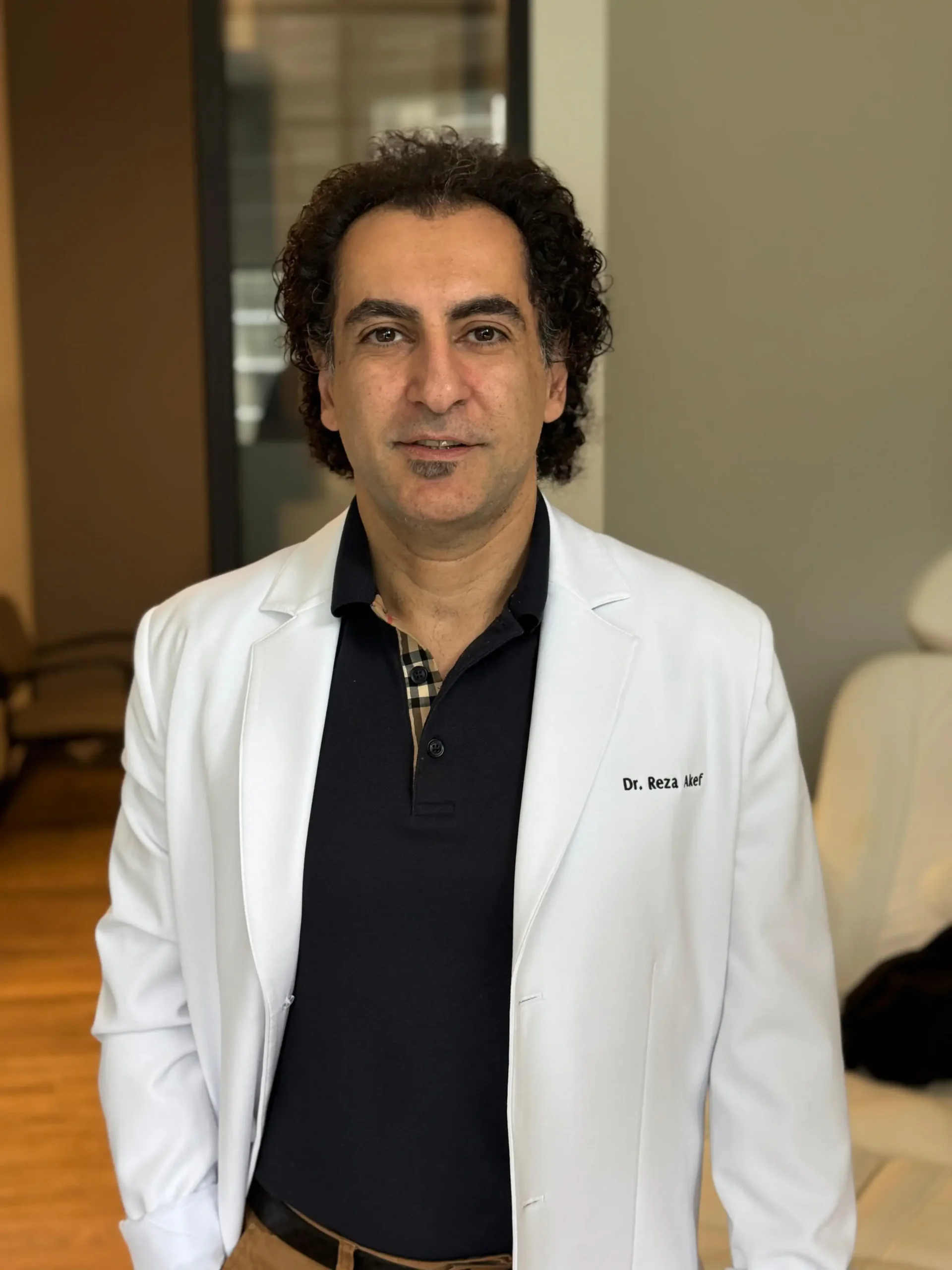
Dr. Reza Akef
Founder & Lead Instructor
Founder of CBAM, expert in non-surgical procedures and medical aesthetics training.
Dr. Mohsen Talani
Medical Director
Medical Director with deep clinical experience in pharmacology and safety protocols.
Course Material
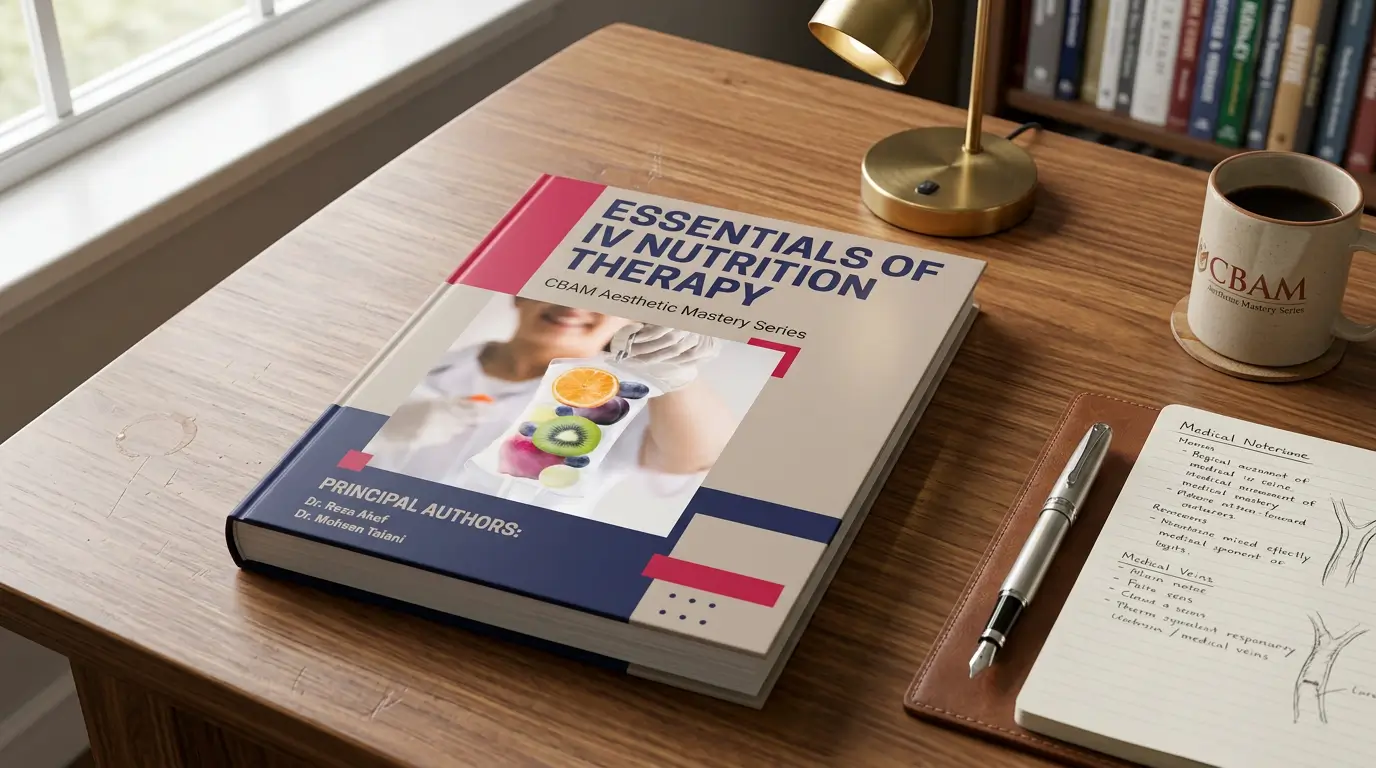
Essentials of IV Nutrition Therapy
Included with enrollment, this course material supports the theoretical foundations of IV nutrition therapy and provides additional context for patient assessment, protocol planning, safety, and clinical decision-making.
Yes. The educational course is delivered online and can be completed at your own pace during the access period. Depending on your profession and jurisdiction, performing IV therapy on patients may also require supervised practical training, demonstrated competency, licensure, or other local requirements.
The course is designed for healthcare professionals seeking structured education in IV hydration and nutrient therapy, including physicians, nurses, nurse practitioners, physician assistants, dentists, international medical graduates, and other eligible clinicians. Clinical authority varies by profession and jurisdiction.
No previous IV therapy experience is required to begin the online educational program. The curriculum starts with foundational concepts and progresses into patient assessment, protocols, safety, complication awareness, and practice integration. Separate practical competency requirements may apply before treating patients.
You will study patient assessment, relevant anatomy and physiology, IV therapy principles, nutrient-based protocols, infusion safety, contraindications, complication recognition, documentation, ethical and legal considerations, and practice integration.
The course is self-paced and includes 1 year of access to the online course materials, including updates made available during your access period.
Yes. After successfully completing the required course components, you will receive a CBAM IV Nutrition Infusion Therapy Certificate of Completion. This documents completion of the educational program and does not replace professional licensure or jurisdiction-specific authorization to practise IV therapy.
The course covers practice-integration considerations for medical, wellness, and aesthetic settings. Whether you can offer IV therapy after training depends on your professional scope, local regulations, prescribing and supervision rules, and any required hands-on competency.
The educational content may be relevant to nurses, nurse practitioners, physicians, physician assistants, dentists, international medical graduates, and other healthcare professionals. Eligibility to perform IV therapy is not determined by course enrollment alone and should be confirmed with the appropriate licensing or regulatory authority.
The course combines foundational science with patient assessment, protocol planning, safety and complication awareness, legal and ethical considerations, and practice integration. It is designed as professional education rather than a generic consumer wellness course.
Legal and regulatory requirements for IV therapy vary by country, state or province, profession, and licensing authority. Before treating patients, confirm your scope of practice, prescribing and supervision rules, hands-on competency requirements, medication or compounding rules, consent standards, documentation obligations, and emergency-preparedness requirements with the relevant local authority.
Ready to Start?
Build Your IV Therapy Knowledge for Clinical Practice
Study IV hydration and nutrient therapy through a structured online course covering clinical foundations, safety, protocols, and practice integration.